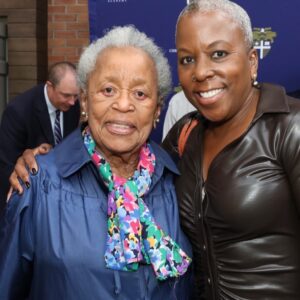
Joan, nearly 92 years old, was raised in Coeymans, NY, and lived there for nearly 80 years. Joan married, had four children, and worked as a teacher, including as a substitute teacher through her 70s. Four years after her husband’s passing, she chose to sell the family home and move to a senior apartment community in Albany, NY. She selected her second floor apartment and has never looked back. The apartment gives her the privacy she values and proximity to her children that she needs.
While her children lamented, “where are we going to hold big dinners,” Joan made it clear her mind was set and responded, “Your house.”
For the past 12 years, Joan has been living independently – structuring her daily life in routine, staying socially connected, and leaning on help from her children when necessary.
Structuring an Independent Daily Life
Joan starts each day with a regular morning routine, full of rituals that anchor her day:
- Morning mass
- Breakfast
- Tidying up her apartment
Joan’s routine grounds her and allows her to showcase her purposeful independence. Her apartment is much more manageable than the former family house with a large lawn and multiple levels. Still, Joan paces herself deliberately by “fixing up something in a room” each day rather than tackling everything at once.
“I don’t want my children coming in saying, ‘We’ll do this, we’ll do that.’ I know my limits and I stick with them.”
In addition to her morning rituals, Joan keeps an active social life. She regularly volunteers, visits with friends, and attends the symphony. “I have the friendship of many people here in the building,” says Joan.
Asking for Help: The Hardest Thing
“It’s not easy asking for help. I hesitate as long as I can,” Joan confesses.
“Generally, I can take care of myself. I’m not too proud to ask for help. And I will if I falter,” Joan emphasizes. On a day to day basis, Joan will ask her daughter for help first, then turn to one of her three sons.
When she was 89, she had an episode that required her to ask for help. She was at her daughter’s house when she couldn’t talk. She banged on the table to get her daughter’s attention. The episode sent her to the ER and her first hospital stay outside of giving birth to her children. It was a turning point for Joan.
Now, Joan has a Life Alert device. She wears it around her neck or keeps it in a spot she knows she can reach. While it’s something her children requested, Joan understands the concern because it’s related to her biggest concern: falling. She’s seen terrible things happen with people her age, or even younger, falling. If wearing a Life Alert device brings assurance to her children, and even a little peace of mind to herself, it’s a practical concession to preserve her safety and independence.
Roles Reversed: Her Daughter as Her Caregiver
“I knew my daughter was always there. And when my husband died, she just automatically took over. We daughters have a tendency to do that,” Joan confesses.
Joan feels that their relationship has grown stronger over the years. Joan shares that her daughter is not overbearing, but she’s very watchful and very mindful.
“She says to me so many times, ‘I don’t think you should do that, Mom’ and then, ‘No, I don’t think you, you should do that.’ And when she says it that way, I figure I better take heed, you know,” Joan says. It’s almost like the roles are reversed between mother and daughter now–where Joan’s daughter has to be very persistent.
Joan smiles, “In fact, I have to turn my face and laugh because she just thinks she’s in total control.”
While some of the day-to-day communications might be different, Joan is clear she will always be her mother and not her buddy. Joan also feels her daughter is conscious of how far to go and where to draw the line, even as she edges near it. Often as a concession, Joan always promises to call her daughter when she gets home from outings.
What makes this mother-daughter role reversal and new support relationship continue to work is that Joan feels listened to, not managed by her daughter.
Planning for Independence, Not Needing Help
Reflecting back on the decisions she made to age in place, Joan feels she defined her desire for independence and staying in the family home as long as possible, but didn’t really think through all the logistics. She had not fully considered how hard it would be to mow the lawn, shovel snow, or even simply keep up with cleaning and maintenance of a 9-room center hall two-floor colonial home as she aged. Even the yard maintenance was a lot to keep up with, despite the years of landscaping her husband had invested in. Joan is certain that if her husband were still with her, they would have eventually downsized.
The apartment move was a plan that worked to maintain independence. It was affordable, manageable, and near family without living with them.
Joan values proximity without dependence. “While I can, I would like to do it,” Joan says and also confesses, “I’m not proud.” Her desire is to preserve autonomy as long as possible, but she’ll ask for help when it’s truly needed.
Closing Reflection: Living Fully at Any Age
“I want to live the best that I can live every day. I want to live to the fullest,” Joan says with a big smile.
For Joan, independence is a life philosophy, not stubbornness. It’s a posture towards life.