For many older adults, the dream is simple: stay in the home they love for as long as possible.
And, when families picture “aging in place,” they often imagine something simple: an older adult staying in their home, maybe with a little extra help.
In reality, the journey is rarely simple. Aging in place doesn’t happen by accident. It requires planning, coordination, and often the help of both family members and professional caregivers.
Caregiving rarely starts with a big plan
Linda, a nurse by training and professional caregiver, spent nearly a decade helping care for an older couple navigating dementia, declining mobility, and the complex realities of aging at home. Linda first became involved as a caregiver after a friend asked if she could stop by and help the older couple a few hours a week.
When Linda first began helping the couple, their needs were minimal and the couple was largely independent. She visited a few times each week to assist with errands and household tasks. Another caregiver helped with basic personal care like food preparation and dressing.
“Caregiving often starts with just a few hours of help each week — but those small supports can make aging at home possible,” says Linda.
But as time passed—particularly as dementia progressed—those occasional visits became increasingly essential. The need for help expanded to assistance with showers and meals to full support with medications, mobility, safety, and daily supervision.
Eventually, the family assembled a team of eight caregivers working rotating shifts to ensure care was always available.
Caregiving works best as a team
At the peak of the older couple’s care needs, care coordination became a job of its own. Even when families hired help, someone still had to coordinate care. Whether it’s a family member or a paid caregiver, it’s a dedicated role and one that requires strong communication skills, organization, and ideally a tech-savvy approach.
Linda led the team and managed:
- Caregiver schedules
- Regular updates to the family
- Medication routines
- Safety concerns
- Visits to medical appointments, and eventually memory care
Mental decline changes family dynamics
One of the hardest parts of caregiving may not be the physical care—it could be helping other family members understand what is happening along the aging journey.
In some cases, simple activities, like eating, can become more difficult as conditions like Alzheimer’s progress. Changes in routines can be hard to understand or even accept.
According to Linda, the older man she cared for “kept thinking his wife was going to get better.”
For many families, this is a common challenge. Spouses or other family members often experience the slow progression of cognitive decline differently than outside caregivers. That’s why having a community of caregivers (including family and professional) and open communication is essential to monitor changes and evaluate when additional care is needed.
Checklist: Preparing for the caregiving journey
Caregiving needs almost always increase gradually, not suddenly. Starting with small supports and planning for future care can make the transition smoother.
For families hoping to help an older loved one age in place:
- Start planning earlier than you think. Care needs often escalate gradually.
- Create a communication system. Caregivers, family members, and clinicians should share updates with clarity and timeliness.
- Identify a care coordinator. Someone needs to manage schedules and decisions.
- Accept that needs will change. What works today may not work next year.
- Be patient.
No caregiver should have to do it alone. Caregiving isn’t just logistics and schedules. It’s love, loss, resilience, and the quiet moments families share along the way.
A new generation of caregiving support
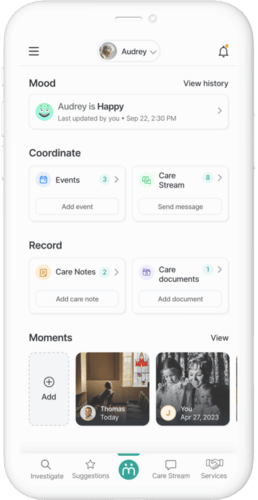
Today, tools like the Maia Care app are helping families and professional caregivers track changes, coordinate care, and share updates in one place.
When caregiving is connected and visible, families and older adults can make better decisions—and older adults can stay safely at home longer.